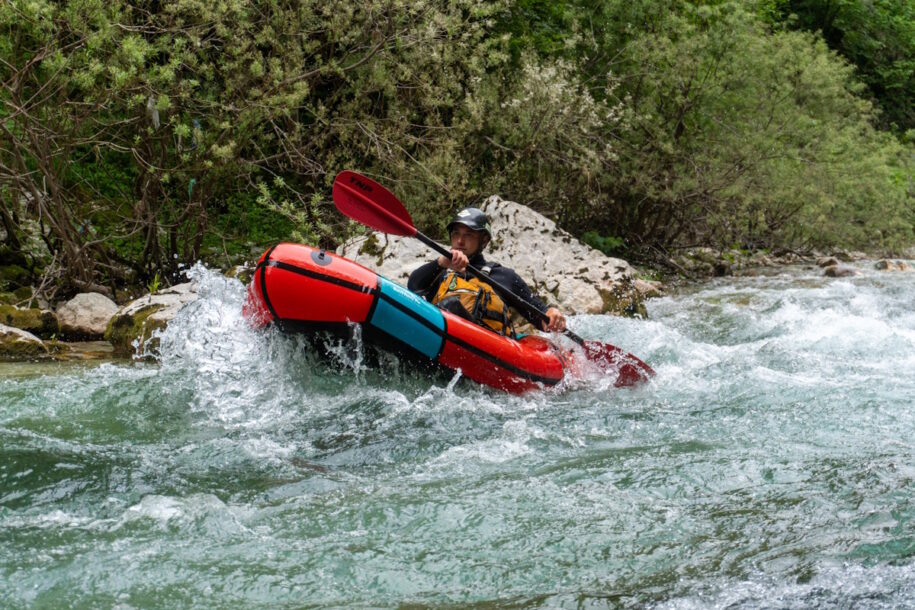
Kayak and Packraft – Two Sides of the Same River
In two decades of living with rivers, I’ve tried almost every craft used today for sport, recreation, or adventure travel. My journey began back in high school. By pure chance, I found myself face to face with the Tara River, on my very first rafting trip — one that I still remember vividly. And I remember that first meeting with the river itself — it was love at first sight.
Rafting was, in a way, my initiation into the world of whitewater. I worked on the Tara River for more than a decade, first as a rafting guide, then as a trip leader and organizer. I loved every part of it — guiding people, meeting new friends, and living in nature. But as it often happens, after some time, I started craving change. I needed that moment of solitude that every person eventually seeks. No matter how social we are by nature, as Aristotle said, we all need moments of facing ourselves — our thoughts and emotions.
And then, one day, quite unexpectedly, a kayak came into my life. Wow. What a shift! It felt like being reborn. Once again, I rediscovered the river — but in a completely new way. I found myself enjoying the rhythm of paddling through whitewater, feeling genuine happiness simply because I was doing it alone. It was a revelation — a new love story.
Soon after, with dedication and countless hours of training, I joined kayaking expeditions across the Balkans, and later, far beyond. I discovered a new community, new lifestyles — and once again, a new version of myself. Kayaking became my everyday life, my passion. New perspectives opened up, new opportunities and lessons. I eventually became a whitewater kayaking instructor, founded Kajak Fest Tara, and began sharing that love with others. Teaching someone to paddle a kayak isn’t easy — it’s a demanding, responsible task. For beginners, the cold water, fast currents, and that sense of instability can be intimidating. But it’s in those moments — when we step outside our comfort zone — that we truly meet ourselves, our limits, and our courage to push them further.
From that same desire to share my love for nature and rivers, Balkan Expeditions was born. From the need to explore, to connect, to discover — both ourselves and each other — through adventure.
Although kayaking remains deeply rooted in who we are at Balkan Expeditions, our story has naturally evolved to include its younger sibling — the packraft. While both share the same essence, there are some real, meaningful differences between them. And since that’s one of the questions our guests — our fellow adventurers — ask most often, I’ll try to explain it as simply as I can.
When we talk about the kayak, we’re talking about one of humanity’s oldest river crafts. The Inuit and other Arctic peoples built them thousands of years ago for hunting and survival, crafting wooden frames covered with seal skins. Every kayak was unique — built to fit the paddler’s body perfectly, almost like an extension of the person. In the 19th century, Europeans discovered kayaking and turned it from a tool of survival into a sport and a way of exploration. Today, the kayak is not just a craft — it’s a philosophy of movement, freedom, and self-reliance.
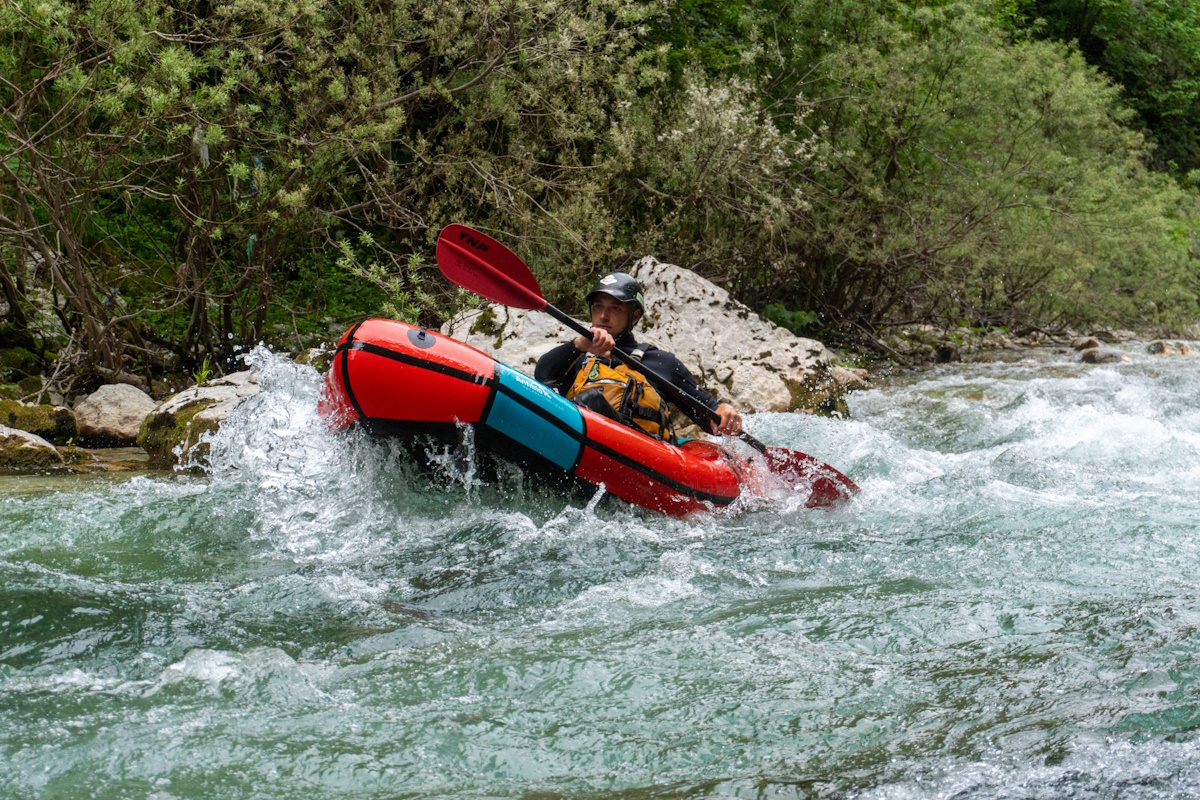
The packraft, on the other hand, is much younger, yet it shares that same spirit — the human urge to explore nature and venture into the unknown. The first lightweight inflatable boats appeared in the mid-20th century, originally for military and exploration purposes, to cross wild rivers. In the 1960s, Alaskan adventurers began using them to reach remote wilderness areas where no kayak could go. Thanks to modern materials, packrafts became incredibly light, durable, and versatile — unlocking a new kind of adventure, one where everything fits into a backpack… or even on a bike.
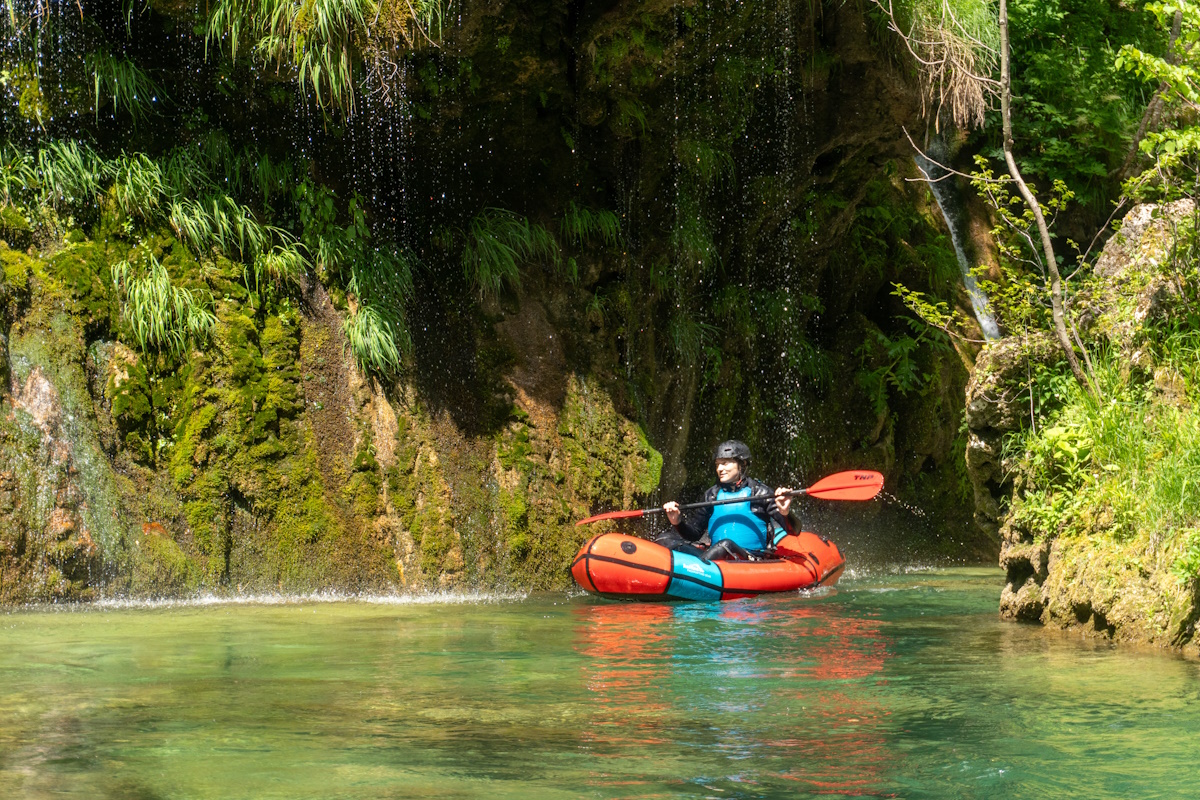
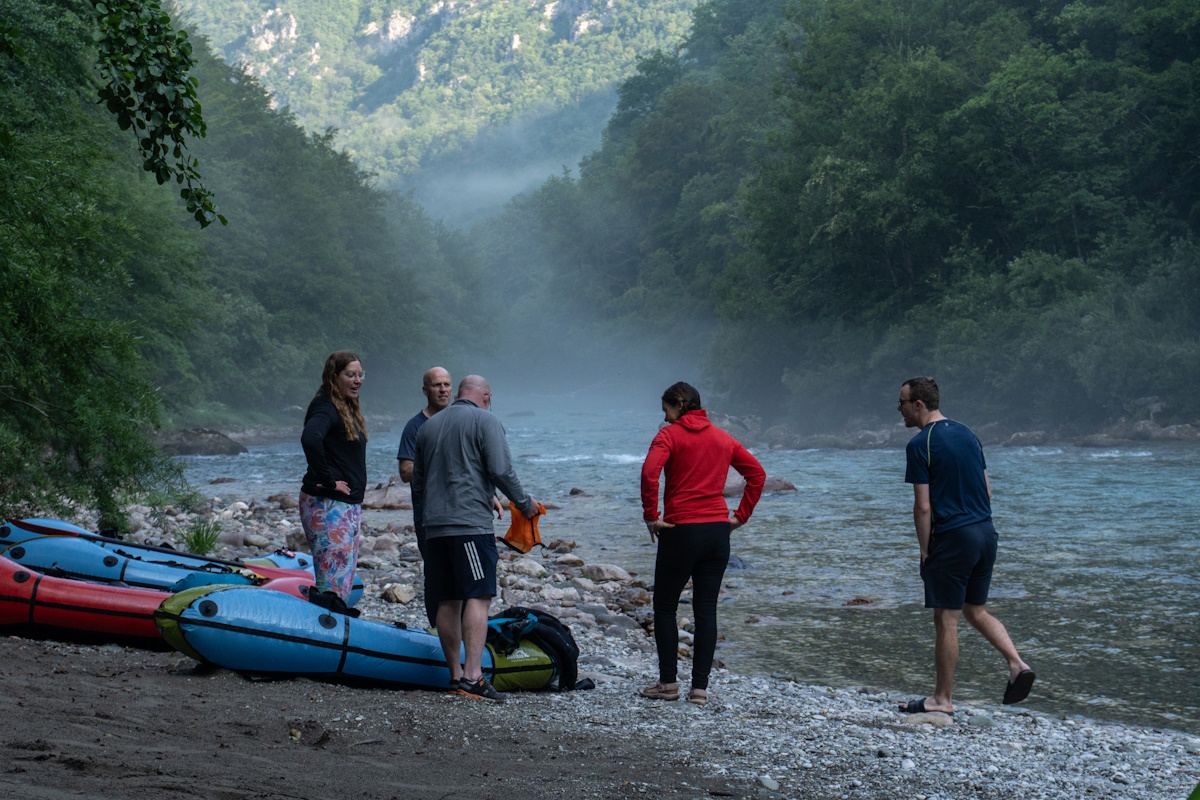
For me personally, the packraft became a way to return to my roots — to freedom, simplicity, and limitless exploration. While a kayak demands more — more knowledge, more equipment, a vehicle, even roof racks — the packraft, well, you carry it on your back. When you reach the river, you inflate it and go. No rush, no noise, nothing but you, the water, and the moment.
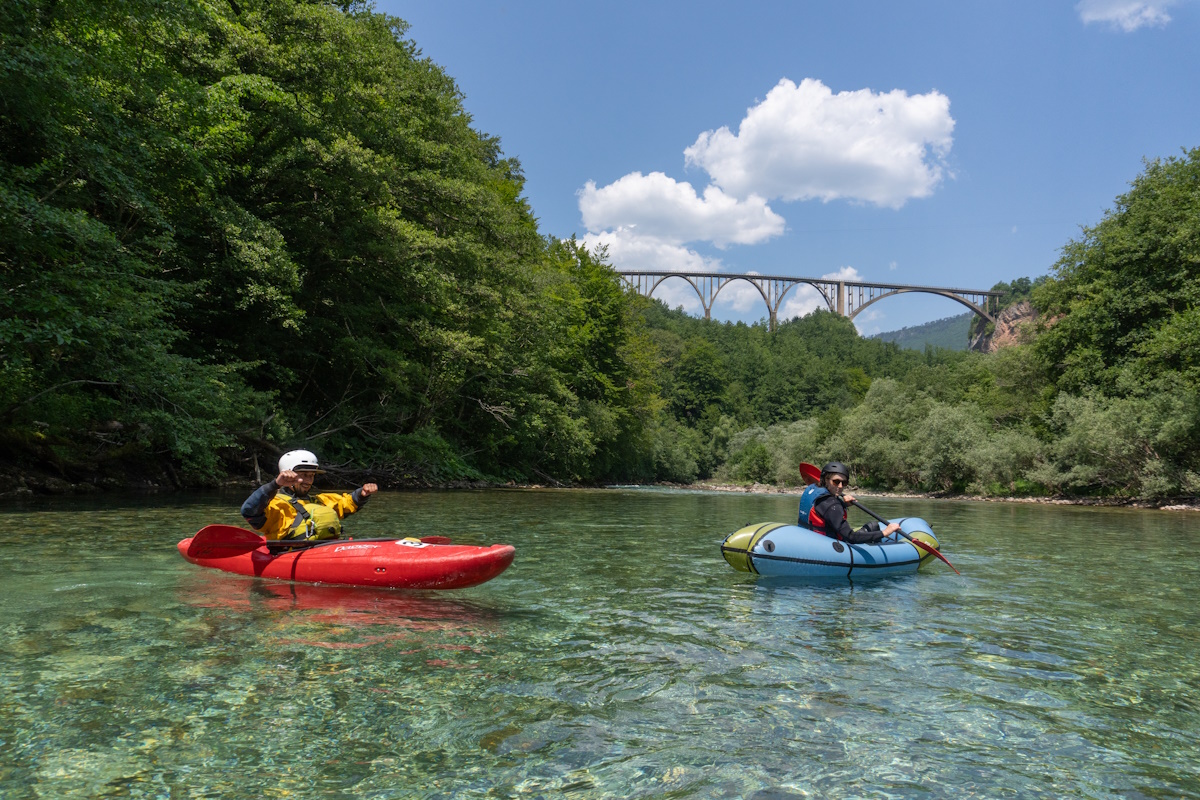
Kayak and packraft are, in truth, two sides of the same river. The kayak is fast, precise, and stable — a tool for those who want to master the element. The packraft is softer, slower, but liberating — more forgiving, more intimate. The kayak teaches you discipline, technique, and strength. The packraft teaches you simplicity, presence, and spontaneity. The kayak pushes you to go further; the packraft reminds you to slow down.
For me, both have their place. The kayak is my teacher; the packraft is my reminder. The first taught me how to conquer water, the second taught me how to surrender to it.
From the perspective of a whitewater guide and later a kayak and packraft instructor, I always advise beginners to start with the packraft — and I’ll explain why as simply as I can. The basic paddling principles are the same. The river, its obstacles and challenges, are the same. The gear is nearly identical (except for the craft itself). The rush of adrenaline is the same. The rules are the same.
However, what makes the real difference — and why I believe the packraft is better for beginners — comes down to a few simple things:
It’s much easier to pack. It takes less space. It’s significantly lighter to carry — especially in wild canyons where you have to hike to reach the river. It’s slower, which means you have more time to learn and react.
There are countless other comparisons, but these, in my opinion, are the key differences for anyone just starting out. I believe everyone should begin in a packraft, learn the basics of paddling and whitewater, and then move to the kayak to experience the full mastery of movement on the river.
In the end, whether we choose a kayak or a packraft often depends on where we live. Coming from Montenegro, one of the turning points for me in focusing more on packrafting was the wild beauty of my own country. Our rugged, remote canyons hide rivers that are both breathtaking and challenging to reach. Some are kilometers away from the nearest road, and we always dreamed of a day when we could give our backs a break — trading 25 kilos of gear for just 4 or 5 — and jog down to the river, light and free.
Today, thanks to the amazing design and lightness of the modern packraft, much of what we do at Balkan Expeditions is based on packrafting adventures across Montenegro. We’re proud to be the first company that introduced packrafting here, and now we organize multi-day expeditions on the Tara and Komarnica Rivers. In spring, we also run one-day and weekend packrafting trips on other stunning rivers like the Cijevna, Morača, and Ćehotina. Our goal is to show travelers the wild, untouched beauty of Montenegro’s canyons and rivers — and to make their time here unforgettable. How successful we are at that, you can judge by the reviews we receive.
So, at the end of this diary, I invite you to test yourself and your limits. Step outside your comfort zone — even if just for a few days. Trust me, you won’t regret it. Come paddle the Tara River with us, camp on the wild beaches of Europe’s deepest canyon, or hike down to the Komarnica Canyon with a packraft on your back — and see for yourself why this river deserves protection. Join us in sharing moments in nature that we’ll remember for the rest of our lives.